Materials & craftsmanship
Leather & tanneries
A beautiful wallet starts long before the first stitch. The hide, the tannery and the finish all shape how leather feels today—and how it changes with you.
Why choose full-grain?
Natural character. Everyday strength.
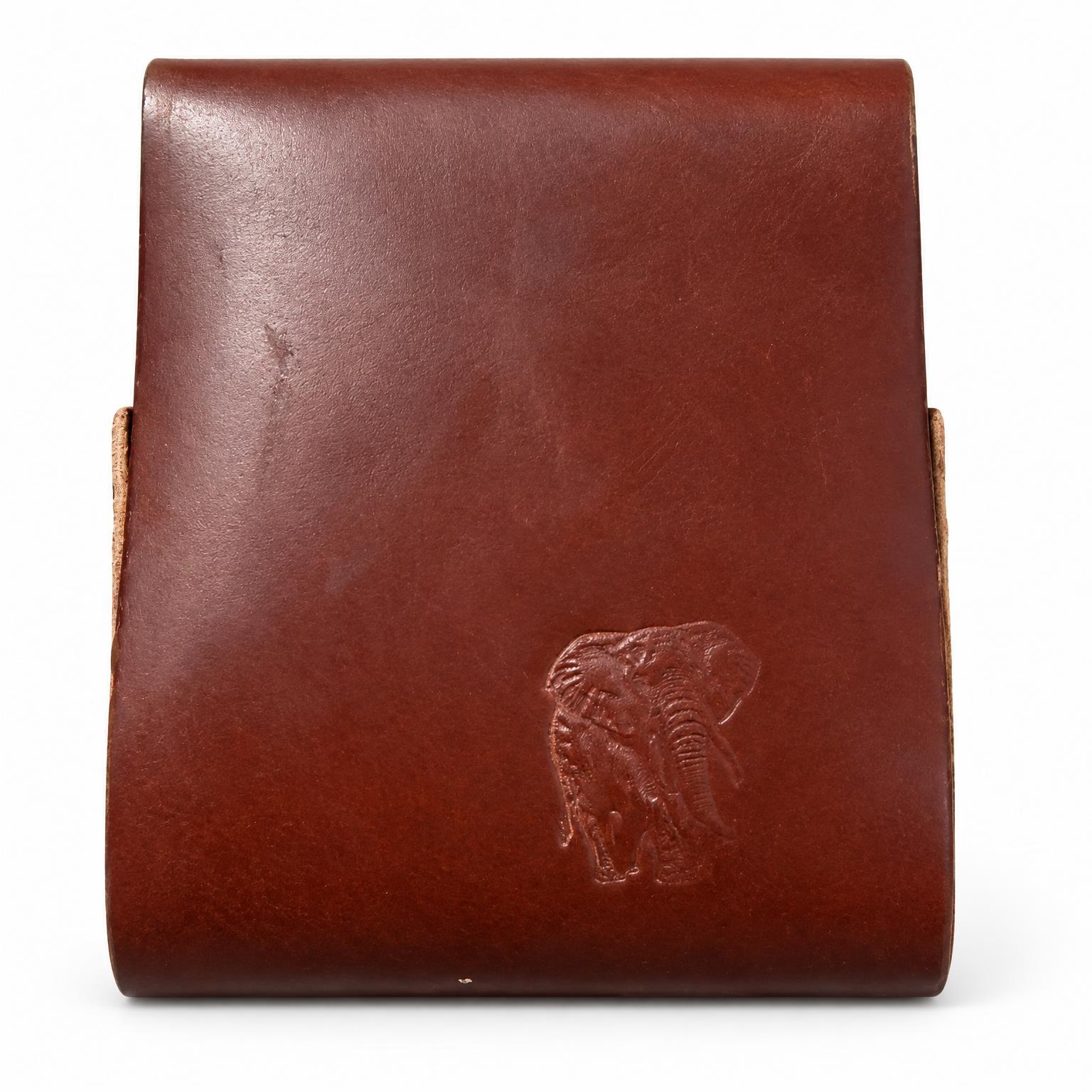
Full-grain leather retains the hide’s original grain surface rather than having it sanded away to remove imperfections. It can show pores, wrinkles and small natural marks. These variations are part of the material—not a printed imitation of grain.
A strong starting point
Retaining the grain preserves the dense outer fibre structure. With suitable thickness, good construction and care, full-grain leather is well suited to wallets and belts that see regular use.
A patina that is yours
Handling, light and everyday wear can deepen colour and create a softer sheen. How much patina develops depends on the tannage and finish: less-covered surfaces usually show more change.
No two pieces alike
Natural grain gives each piece individual character. If you enjoy leather that shows its history rather than staying perfectly uniform, full-grain can be a rewarding choice.
Full-grain describes the surface, not a guarantee of quality or lifespan. Tanning, finishing, thickness and craftsmanship matter too. Leather is not waterproof, and not every leather in our collection is full-grain cowhide.
Full-grain terminology: Leather Research Laboratory ↗Grain and tanning are different
Full-grain refers to the retained surface of the hide. Vegetable tanning uses plant-derived tannins; chrome tanning uses chromium salts. Either can produce full-grain leather. Tanning and finishing influence firmness, flexibility, colour and feel—one label alone does not tell the whole story.
Shell cordovan is different, too
Shell cordovan comes from a dense membrane beneath the hide in the horse’s hindquarters, not the grain surface of cowhide. It is prized for its smooth lustre and distinctive rolling creases. Its quality should not be judged by the term “full-grain”.
Behind the material
Meet the tanneries
A tannery transforms a hide into leather. Its methods, oils, waxes and finishing choices give each material a different personality. These profiles explain the makers—not a promise that every leather has the same properties.
Chicago, United States
Horween
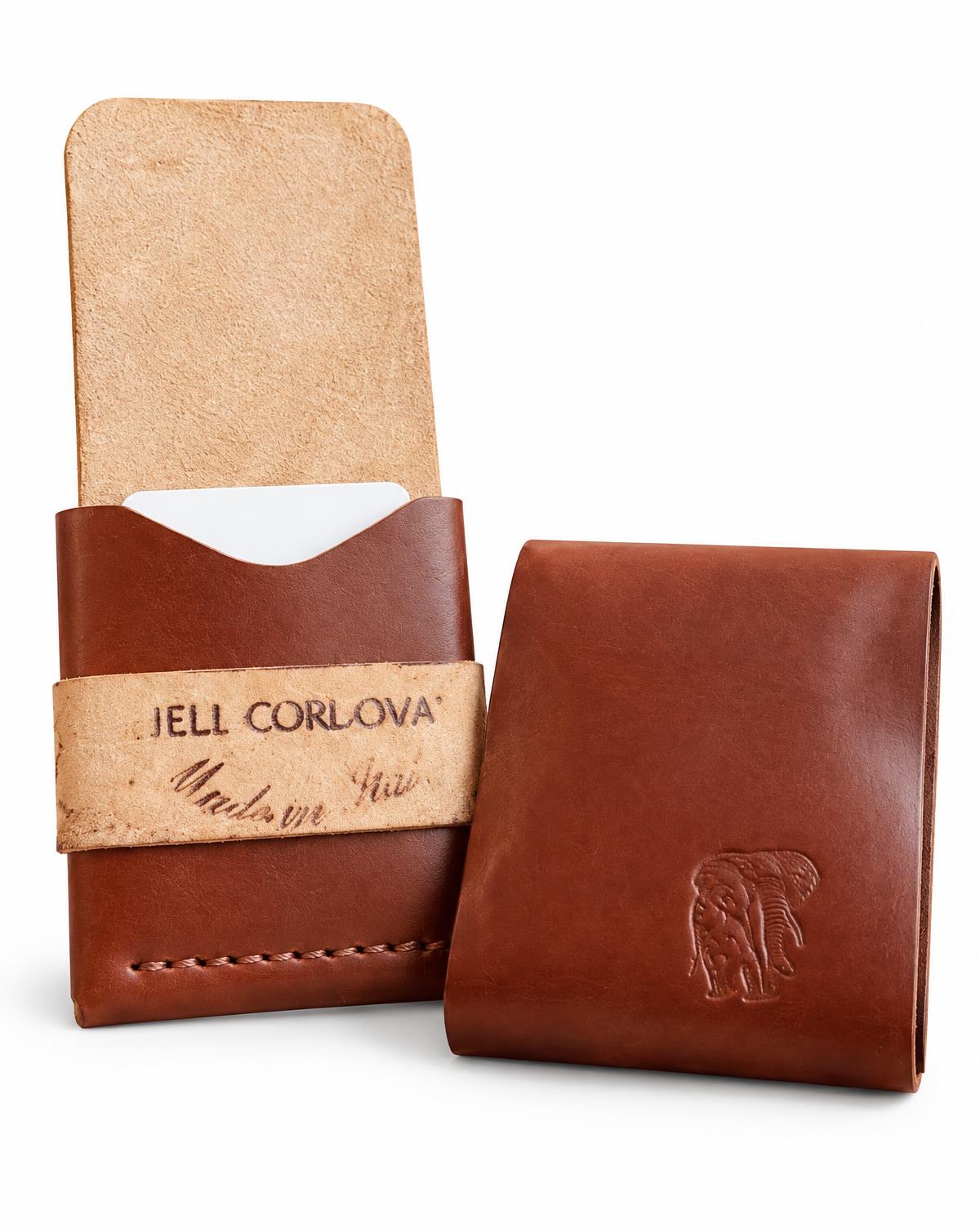
A family-owned tannery founded in 1905. Dublin is a waxed version of Horween’s Essex, a full-grain side leather. Our floral-embossed Dublin wallet adds a decorative texture to that material.
Dublin’s wax-rich finish brings depth of colour and a character that develops with handling.
Read the producer’s storyPonte a Egola, Tuscany, Italy
Badalassi Carlo
An Italian tannery known for vegetable-tanned vacchetta and a member of the Genuine Italian Vegetable-Tanned Leather Consortium. Our Ecbatana Lux product description identifies its leather as Badalassi.
Ecbatana Lux is a leather article name, not a separate tannery. Look to the individual piece for its particular texture and finish.
Read the producer’s storyTuscany, Italy
Rocado
Rocado produces shell cordovan at its Tuscan production site. Our marbled-brown stitchless Impi is listed with Rocado shell cordovan.
Shell cordovan offers a smooth surface and distinctive lustre; the marbled finish gives this wallet its individual colour pattern.
Read the producer’s storyPonte a Egola, Tuscany, Italy
La Bretagna
Conceria La Bretagna makes vegetable-tanned leather. Its founder’s vacchetta was developed as a softer cowhide than traditional sole leather, and our Vacchetta Indaba is listed with this tannery’s leather.
Vacchetta describes a leather tradition, not a different tannery. Feel and finish vary between articles, so the product details matter.
Read the producer’s storySanta Croce sull’Arno, Tuscany, Italy
Maryam
Conceria Maryam produces several leather articles, including shell cordovan. Our cognac shell cordovan Indaba is listed with this maker; some catalog titles spell its name “Mariam”.
The cognac colour and smooth sheen distinguish this shell cordovan wallet. Like Rocado cordovan, it is not full-grain cowhide.
Read the producer’s storyRead the leather name, not just the label
A product’s leather name may identify a tannery, a tannage, a finish or a colour. Refer to each product’s leather details for its specific material; “genuine leather” alone does not tell you its grain or tanning method.
Care lets the character develop
Wipe gently with a soft cloth, avoid soaking and direct heat, and let damp leather dry naturally. Use a conditioner appropriate to the specific leather, sparingly, and test it on a hidden area first. Shell cordovan needs its own care approach; avoid treating every leather the same.
Explore handcrafted wallets